
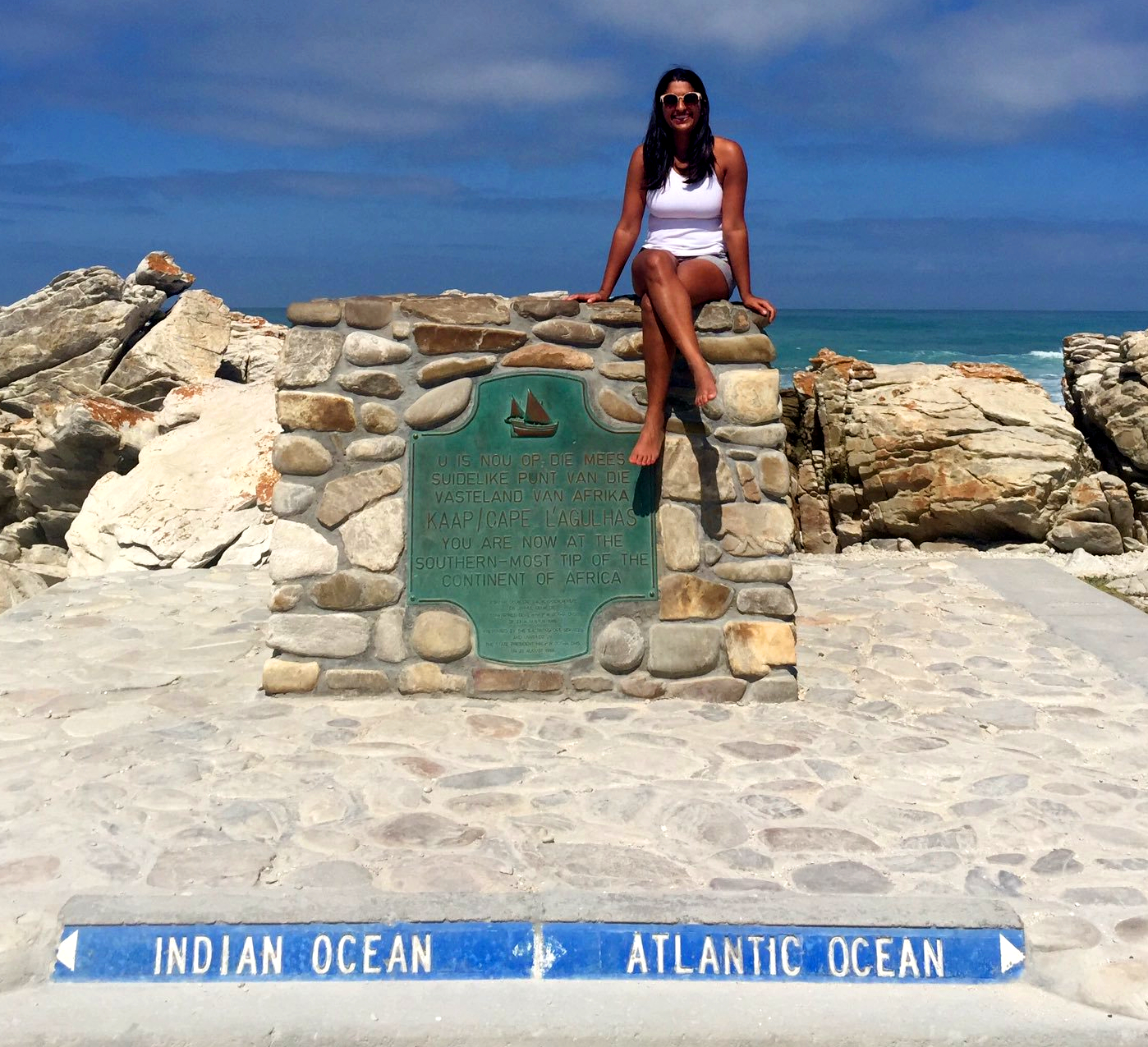
Cape Agulhas is the southernmost point of the African continent. Not Cape Point as many people believe. At Convoy Tours we will take you there, that’s why I always suggest booking the 5 Day tour if you can so we can visit and not rush for the rest of the week
It is also an important stop on the Garden Route journey from Cape Town, although many people know very little about the place beyond its famous geographical distinction.
The name Agulhas comes from the Portuguese word agulhas, meaning “needles”, Named after Vasco de Gama’s compass when he navigated the Cape in 1497. There are two commonly cited explanations for the name. One relates to the sharp rocks and reefs found along the coastline. The other comes from navigation: Portuguese sailors reportedly noted that their compass needles pointed almost exactly north in this area.
Cape Agulhas is traditionally recognised as the place where the Atlantic and Indian Oceans meet.
That description is widely used, although the boundary between the two oceans is not a fixed line that can be seen from the shore. Oceans do not meet like two different-coloured liquids in a glass. The waters are constantly moving, mixing and being affected by currents, wind and temperature.
The boundary is generally associated with the meeting of the cold Benguela Current, which flows northwards along the west coast of southern Africa, and the warmer Agulhas Current, which flows southwards along the east coast.
The Agulhas Current is one of the strongest ocean currents in the world. It carries warm water south from the Indian Ocean along the eastern coast of Africa before turning back eastwards into the southern Indian Ocean.
The Benguela Current, by contrast, brings cold water northwards along the western coast.
The waters around Cape Agulhas are therefore influenced by two very different ocean systems.
This is one reason why the area is geographically significant.
The meeting of these currents does not create a clearly visible line in the sea. There is no point where the water suddenly changes colour and announces that you have crossed from one ocean into another.
The reality is far more complicated.
Ocean boundaries are determined by geographical conventions and the movement of water. The exact point at which the Atlantic becomes the Indian Ocean can vary depending on the definition being used.
But the traditional geographical division places the meeting of the two oceans at Cape Agulhas.
For visitors travelling from Cape Town along the Garden Route, this makes Cape Agulhas a particularly worthwhile stop although getting their takes some effort, it’s one of my favourite places in the world
The Garden Route is famous for its scenery, beaches, forests and wildlife. Cape Agulhas offers something different. Its main attraction is not a particular animal or dramatic mountain landscape, but its geographical importance.
This is the southernmost point of Africa.
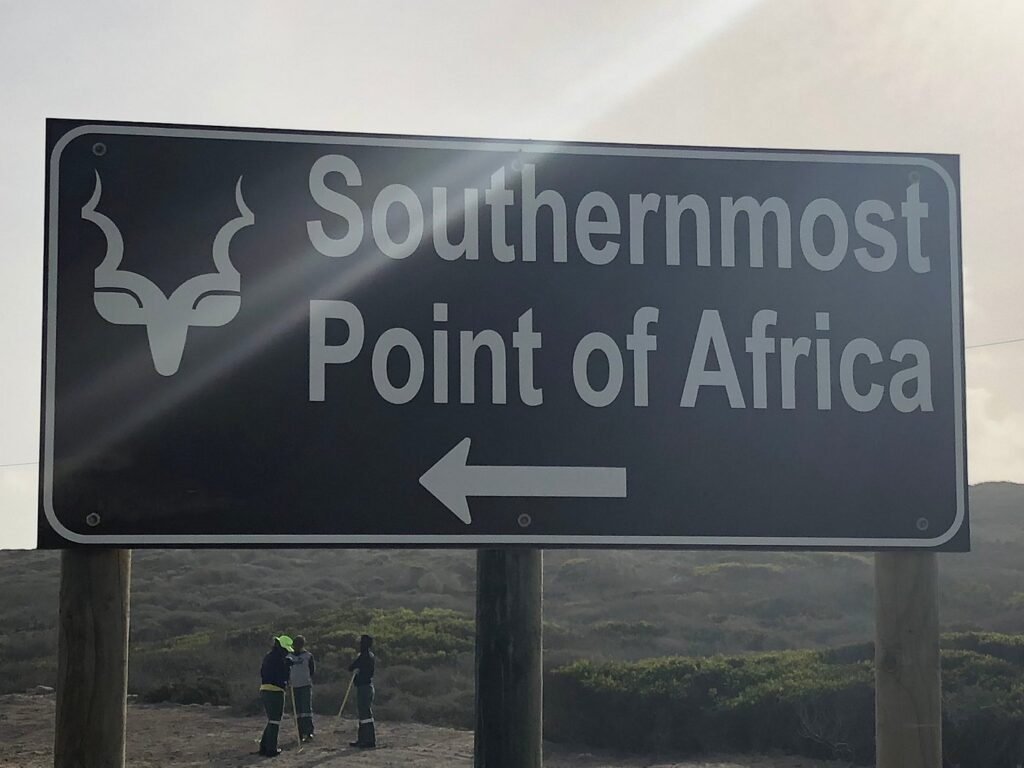
That alone makes it an unusual place to visit.
The coastline here is exposed to the full force of the Southern Ocean and the weather can change quickly. The area is also known for strong winds and rough seas, conditions that have contributed to the dangerous reputation of this stretch of coastline over the centuries.
Cape Agulhas marks the point where the African continent reaches its greatest southern extent. From here, the coastline extends west towards Cape Town and east towards the Garden Route and beyond.
The landscape is relatively open and low-lying compared with the mountainous scenery found in many other parts of the Western Cape. That openness gives the area a very different character from places such as the Cape Peninsula.
There is also something interesting about the fact that such an important geographical location is not particularly dramatic in appearance.
There is no enormous cliff marking the southern tip of Africa. No mountain rises directly from the sea. The boundary between the oceans cannot be seen.
Instead, Cape Agulhas is a relatively quiet coastal area that happens to occupy a very significant position on the map.
The importance of the place comes from understanding where you are.
You are standing at the southernmost point of Africa, in the area traditionally recognised as the meeting point of the Atlantic and Indian Oceans.
The two oceans do not collide in some spectacular natural event. Their waters are part of constantly moving systems, influenced by currents, weather and the shape of the coastline.
But they meet here in a geographical sense, around the southern tip of the continent.
For anyone travelling the Garden Route from Cape Town, Cape Agulhas is therefore more than just another stop along the way.
It is a chance to stand at the southernmost point of Africa and visit one of the most geographically significant locations in South Africa.
On a map, Africa is a huge continent surrounded by water.
At Cape Agulhas, you are standing at its southernmost edge.
The land continues behind you.
In front of you, there is only ocean.
And somewhere around this coastline, the waters of the Atlantic and Indian Oceans meet.
That is Cape Agulhas.
The southern tip of Africa.
Fancy it?
Why a Private Garden Route Tour from Cape Town Is Worth Every Penny – Convoy Tours








1 thought on “Cape Agulhas: At Home at the End of the World”
Pingback: 5 Hidden Garden Route Gems Most Travellers Miss - Convoy Tours