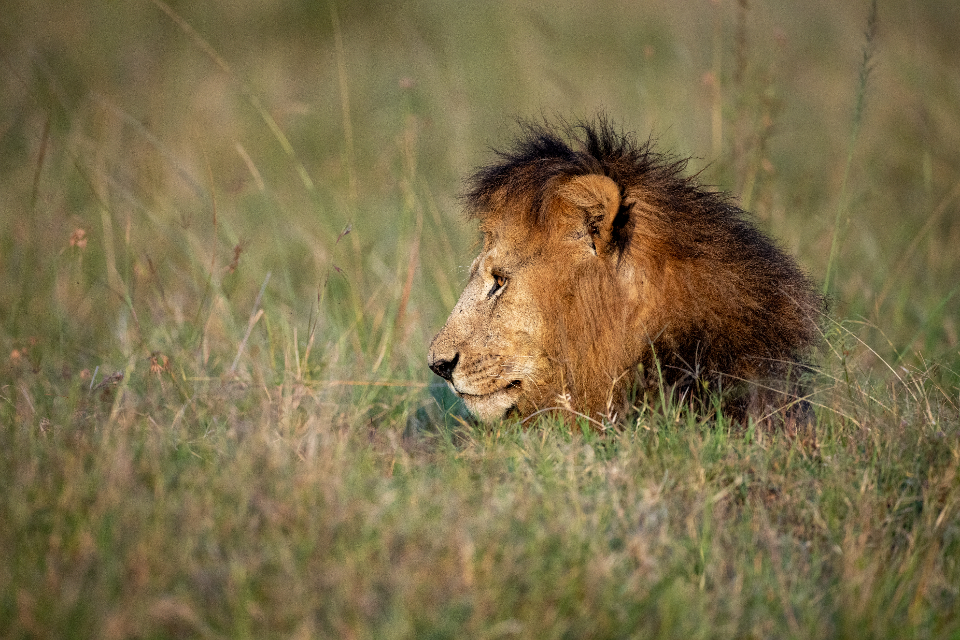
The African lion (Panthera leo) is one of Africa’s best-known large predators and is found in several countries across sub-Saharan Africa. Male lions are distinguished from females by their mane, which develops as they mature. The colour and size of a male’s mane can vary according to age, genetics, health and environmental conditions.
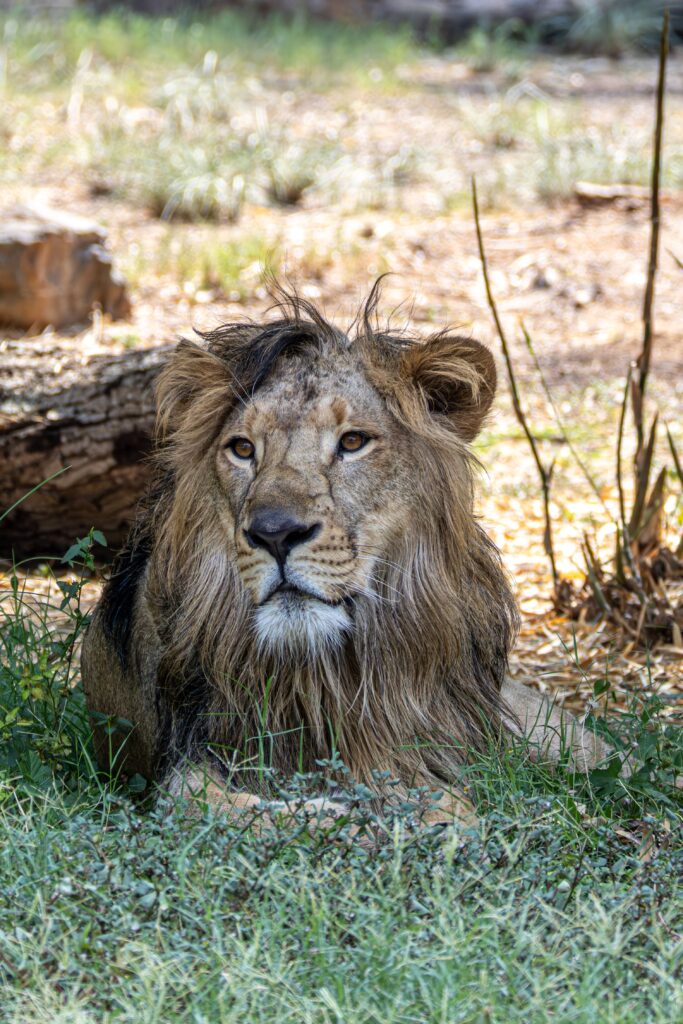
Adult male lions are generally larger and heavier than females. They have powerful forelimbs, strong jaws and large canine teeth adapted for catching and feeding on prey. Their paws contain retractable claws, which can be used when hunting, fighting or defending territory.
Lions are social animals and usually live in groups called prides. A pride can include adult females, their offspring and one or more adult males. Female lions generally do most of the hunting, while males play an important role in defending the pride and its territory. Male lions may also form coalitions with other males, particularly brothers or unrelated males that have joined together.
Lions hunt a variety of prey depending on their habitat. Their diet can include antelope, zebra, wildebeest, buffalo and other medium-to-large mammals. Lions are primarily nocturnal and often become more active during the cooler hours of the evening and night.
Male lions can spend much of their time resting. Lions may sleep or rest for many hours during the day, conserving energy for periods of activity. They communicate through vocalisations, scent marking and physical behaviour. The roar of a male lion can carry over several kilometres under suitable conditions.
The Kruger National Park in South Africa is one of the country’s best-known areas for observing wild lions. The park covers a large area and supports a wide range of wildlife, including lions, elephants, leopards, rhinos and buffalo.
Lions can also be seen in private reserves and wildlife facilities in South Africa. Botlierskop Private Game Reserve, located near Mossel Bay along the Garden Route, is one location where visitors can see lions. The reserve is home to a variety of African wildlife and offers guided wildlife experiences.
The Garden Route is a popular destination for visitors travelling through South Africa, with wildlife reserves located along and near the route. My Garden Route tours from Cape Town can include visits to wildlife areas such as Botlierskop, depending on the itinerary chosen.
African lions face threats including habitat loss, conflict with people, declining prey populations and other pressures. Conservation areas, national parks and responsibly managed private reserves play a role in protecting lion populations and their habitats.
The African lion remains an important species within many African ecosystems. As a major predator, it forms part of the natural balance of the habitats in which it occurs.