
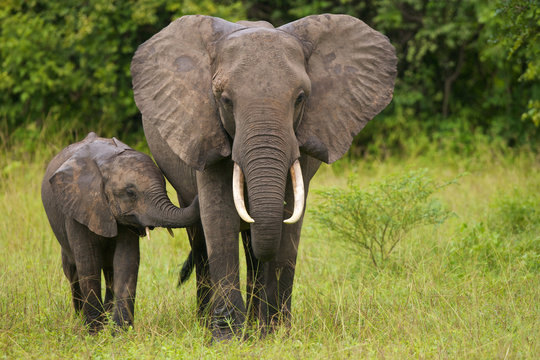
The African elephant is one of the most recognisable animals in the world. Found across parts of sub-Saharan Africa, elephants live in a variety of habitats, from open savannas and grasslands to forests and woodland.
There are two recognised species of African elephant: the African savanna elephant and the African forest elephant. The savanna elephant is the larger of the two and is the species most commonly associated with the open landscapes of Africa.
How Big Is an African Elephant?
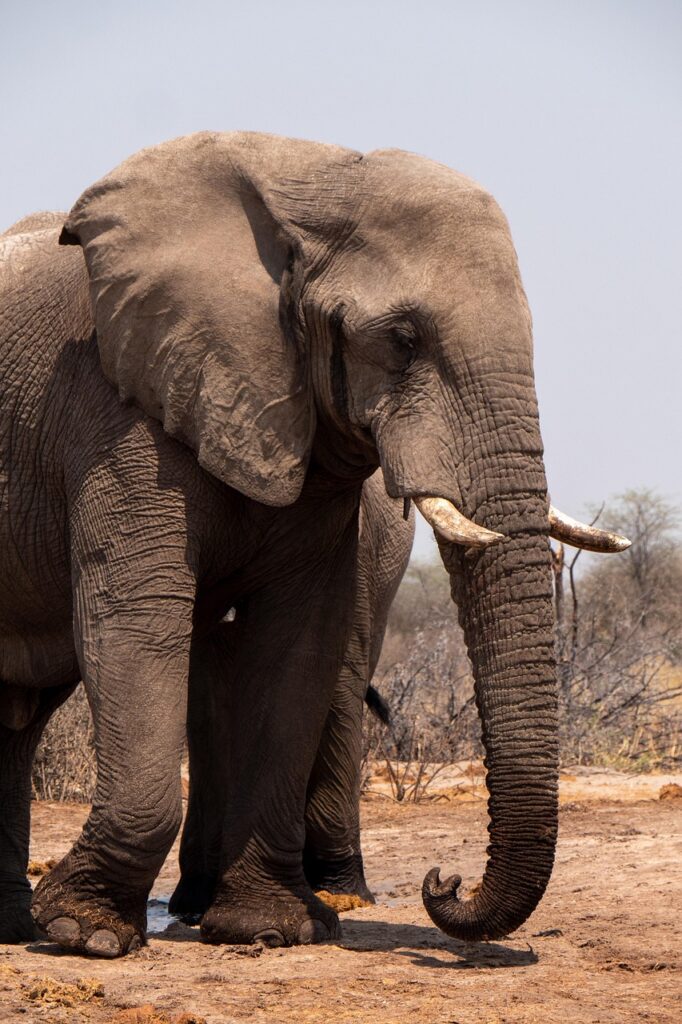
The African savanna elephant is the largest living land animal. Adult males can reach around 4 metres at the shoulder and weigh several tonnes, although size varies between individuals.
Their enormous size is one of the reasons seeing an elephant in the wild is such a memorable experience.
How Are African Elephants Different From Asian Elephants?
African elephants are generally larger than Asian elephants, which are sometimes referred to as Indian elephants.
One of the easiest differences to spot is their ears. African elephants have much larger ears, and their shape is often said to resemble the map of the African continent.
Their large ears are also important for regulating body temperature. Elephants have many blood vessels close to the surface of their ears, allowing heat to be released as blood circulates through them.
Asian elephants have smaller, more rounded ears.
African elephants also generally have a more rounded head, whereas Asian elephants have a distinctive twin-domed head.
Another difference can be seen at the end of the trunk. African elephants have two finger-like projections, while Asian elephants have one.
Tusks
Both male and female African elephants can grow tusks.
Tusks are modified incisor teeth and are used for a variety of purposes, including digging, stripping bark from trees and moving objects.
However, not every African elephant has large visible tusks. Some elephants have very small tusks or may be tuskless.
Family Groups
African elephants are highly social animals.
Females and their young generally live in family groups led by an experienced female known as the matriarch. The matriarch plays an important role in the group and can use her experience to help the family find food and water and respond to potential threats.
Male elephants usually leave their family groups when they reach maturity. Adult males may live alone or associate with other males.
An Important Role in Nature
Elephants have a significant impact on their environment.
They can knock down trees, break branches, create pathways through vegetation and dig for water. These activities can change the landscape and create opportunities for other animals.
Elephants also help disperse seeds through their dung, contributing to the regeneration of vegetation.
Where Can You See African Elephants?
African elephants can be found in many countries across sub-Saharan Africa. South Africa is home to important elephant populations, including those in Kruger National Park and Addo Elephant National Park.
Seeing an African elephant in its natural environment is one of the great wildlife experiences Africa offers. Whether watching a herd crossing open grassland or observing a family group around a waterhole, their size, intelligence and social behaviour make them fascinating animals to encounter.
For visitors travelling through South Africa, seeing elephants in the wild can be one of the highlights of a safari and an experience that remains memorable long after the journey home.








1 thought on “African Elephant”
[691169]supplies professional anti-violence equipments and solutions for the whole world with strong and perfect production capacity. anti-violence.org