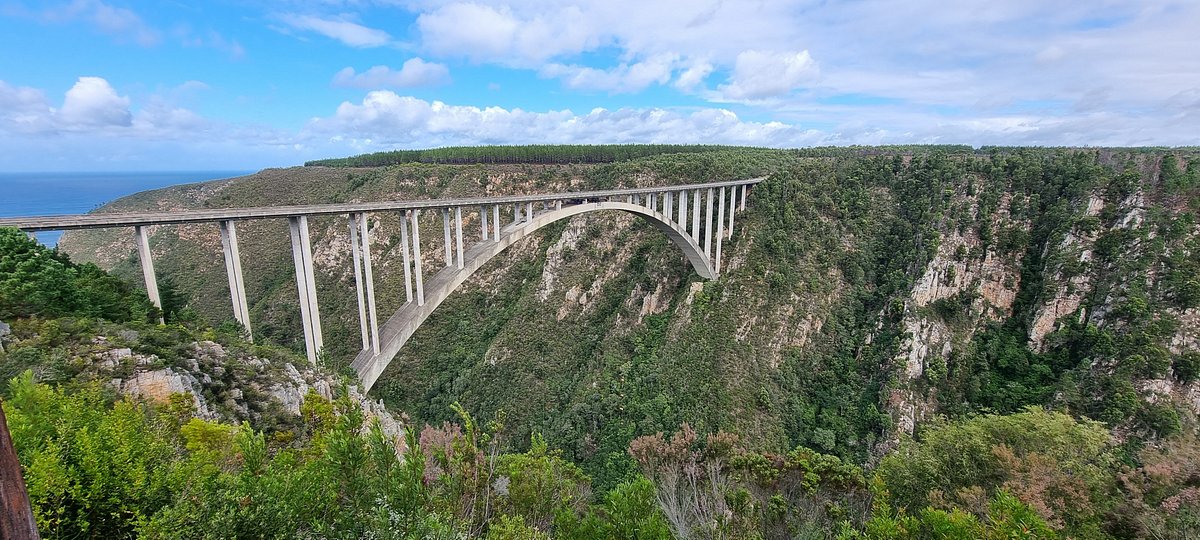
Bloukrans Bridge is one of the most impressive structures on the Garden Route, although many people know it mainly because of the bungee jump that takes place beneath it.
The bridge deserves attention for another reason. When it was built in the early 1980s, it was a major engineering achievement and remains an important part of the N2 between the Western and Eastern Cape.
Construction began in February 1980 and the bridge was completed in June 1983. It was designed by Liebenberg and Stander and constructed by Murray & Roberts and Concor. The finished bridge is 451 metres long, with a main arch span of 272 metres, and the road deck sits approximately 216 metres above the Bloukrans River.
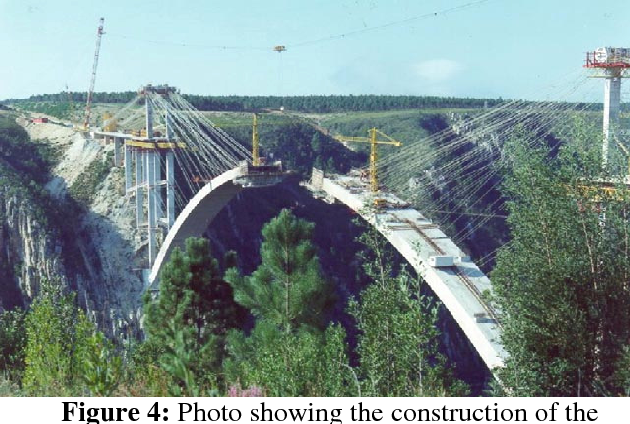
The location presented a considerable engineering challenge. The bridge had to cross a deep, steep-sided gorge, making conventional scaffolding from the valley floor impractical. Instead, the massive concrete arch was constructed from both sides of the gorge simultaneously.
The technique used was known as the suspended cantilever method. Sections of the arch were built progressively outwards from each side, with temporary suspension and tie-back cables supporting the structure during construction. The two halves gradually extended towards the centre until they met and formed the completed arch.
This was an impressive piece of construction for its time. The Bloukrans arch has a span of 272 metres and rises approximately 62 metres, while the road deck is supported above the arch by a series of reinforced concrete columns. The completed structure was designed to carry the N2 across the gorge while working with the difficult terrain rather than trying to overcome it with a conventional bridge design.
The bridge formed part of a wider programme of improvements to the N2 through the Garden Route. Bloukrans was one of three major concrete arch bridges constructed during the early 1980s, alongside the Groot River and Bobbejaans River bridges. Together, they helped replace difficult sections of the old route and made travelling through this part of the southern Cape considerably easier.
There is also an interesting detail about the landscape itself. The foundations had to deal with the geological conditions of the gorge, including steep rock faces and quartzitic sandstone. The arch design was particularly suited to the site because its forces could be transferred into the rock foundations on either side of the gorge.
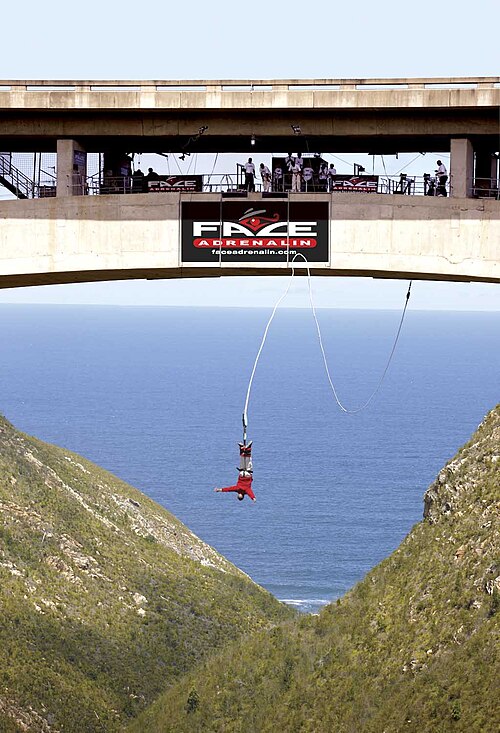
Today, Bloukrans Bridge carries thousands of vehicles along the N2 and has become one of the recognisable landmarks of the Garden Route. The famous bungee operation beneath the bridge, which began in 1997, has certainly added to its reputation, but the bridge itself remains the real engineering achievement.
When travelling the Garden Route with Convoy Tours, it is easy to look at Bloukrans Bridge, take a photograph and move on. But knowing how and why it was built gives the structure a very different significance.
It isn’t simply a bridge over a gorge. It is a remarkable piece of South African engineering, built more than forty years ago in some of the most challenging terrain along the Garden Route.