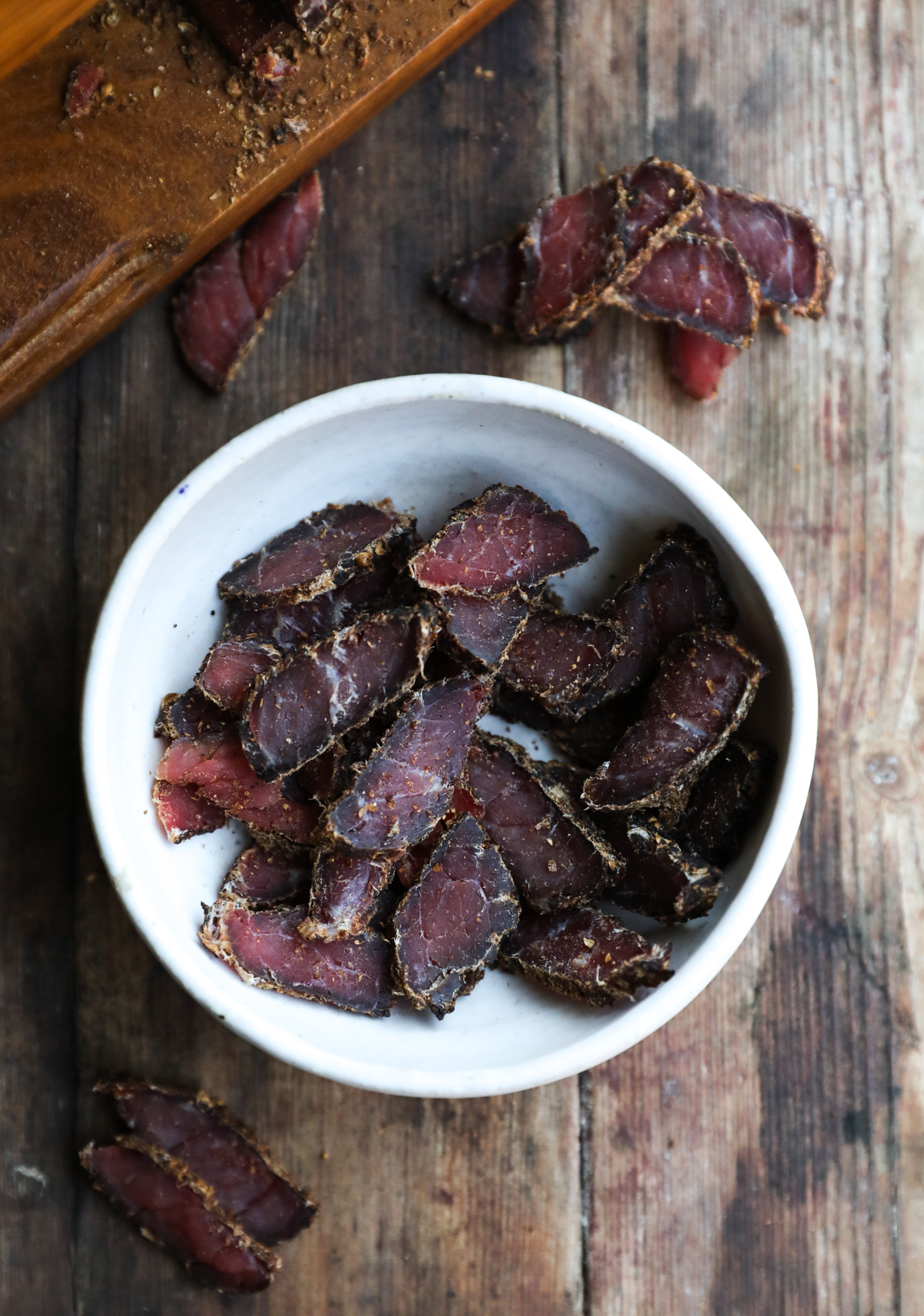
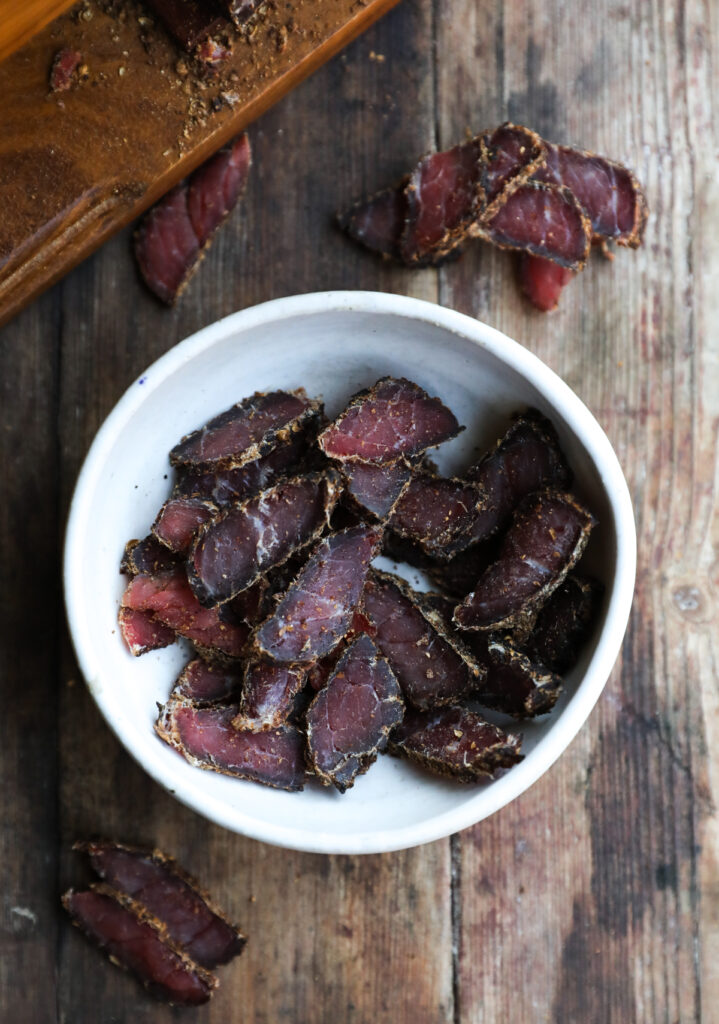
There is nothing more South African than biltong. It is baked into the cake here, an integral part of the fabric of South Africa and a food that has become closely associated with the country’s culture and history.
Made by curing and drying strips of meat, biltong is eaten throughout South Africa and is available everywhere from supermarkets and specialist butcheries to farm stalls and roadside shops. For many South Africans, it is simply part of everyday life.
The history of biltong is closely connected to the early European settlement of southern Africa, although preserving meat by drying it predates European arrival. Indigenous communities in southern Africa had long used drying and other methods to preserve meat, particularly in an environment where refrigeration was unavailable.
The word biltong comes from Afrikaans. “Bil” refers to the hindquarter or rump, while “tong” means tongue or strip. The name therefore relates to a strip of meat traditionally cut from the hindquarters.
European settlers developed their own methods of preserving meat during the 17th and 18th centuries. Dutch settlers at the Cape needed reliable ways of preserving meat for extended periods, particularly when travelling or working away from established settlements. Meat was salted, seasoned and dried, allowing it to remain edible for much longer than fresh meat.
Biltong became particularly important during the Great Trek of the 1830s and 1840s. Voortrekkers travelling inland by ox wagon could not rely on refrigeration or regular supplies of fresh meat. Dried meat was lightweight, portable and capable of lasting for long periods when properly prepared.
Traditional biltong was generally made from beef or game. Venison became particularly important because wild game was widely available in the interior. Today, beef remains the most common meat used for biltong, although game meats such as kudu, springbok and ostrich are also available.
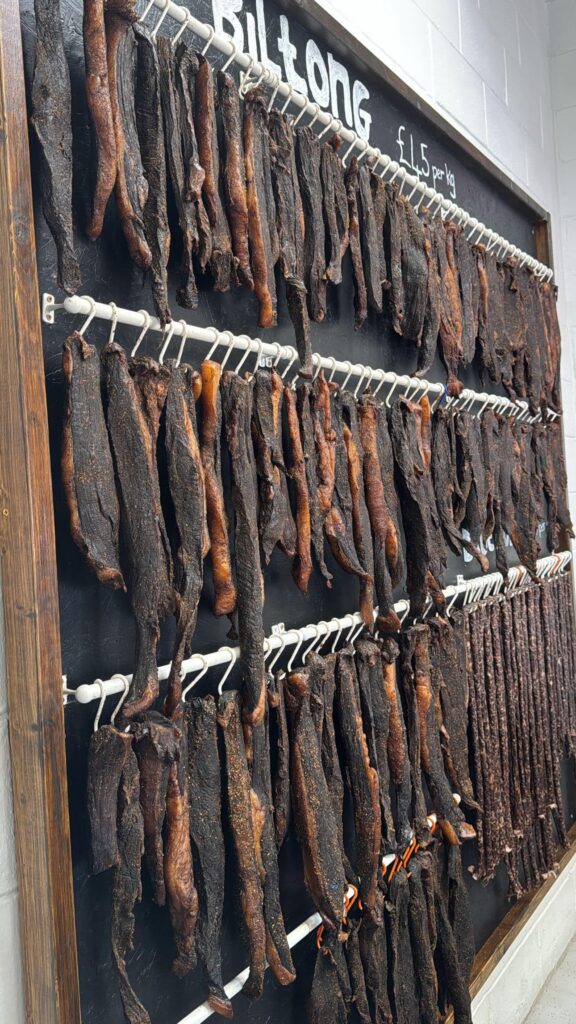
The traditional preparation involves cutting meat into strips and curing it with salt and spices. Vinegar is commonly used during preparation, while coriander is one of the characteristic seasonings associated with South African biltong. The meat is then hung in a controlled environment and allowed to dry until it reaches the desired texture.
Biltong should not be confused with beef jerky. Although both are dried meats, the preparation is different. Jerky is normally cut into thinner pieces and cooked or heated during the drying process, whereas traditional biltong is cured and air-dried without being cooked.
Biltong remains an important part of South African food culture. It is served at social gatherings, sporting events and family occasions and is one of the country’s most popular snacks.
For visitors travelling the Garden Route, biltong is easy to find. Farm stalls, butcheries, supermarkets and specialist shops sell a wide range of varieties, from relatively soft and moist biltong to much harder, drier versions.
The Garden Route passes through areas with a strong agricultural and farming tradition, making local farm stalls a particularly good place to experience South African food products, including biltong.
Trying biltong is something every visitor to South Africa should experience. Preferably, try it the South African way: sitting down to watch the rugby or cricket, with a packet of biltong and a cold Castle beer. It is a simple combination, but it is about as South African as it gets.
From its origins as a practical method of preserving meat to its place in modern South African culture, biltong has become far more than a snack. It is an integral part of the fabric of South Africa and one of the country’s most recognisable foods.
Shot Bru!