South Africa’s National Bird
The Blue Crane is one of South Africa’s most distinctive birds. Known scientifically as Anthropoides paradiseus, it is South Africa’s national bird and occurs almost entirely within the country, with a small population also found in Namibia.
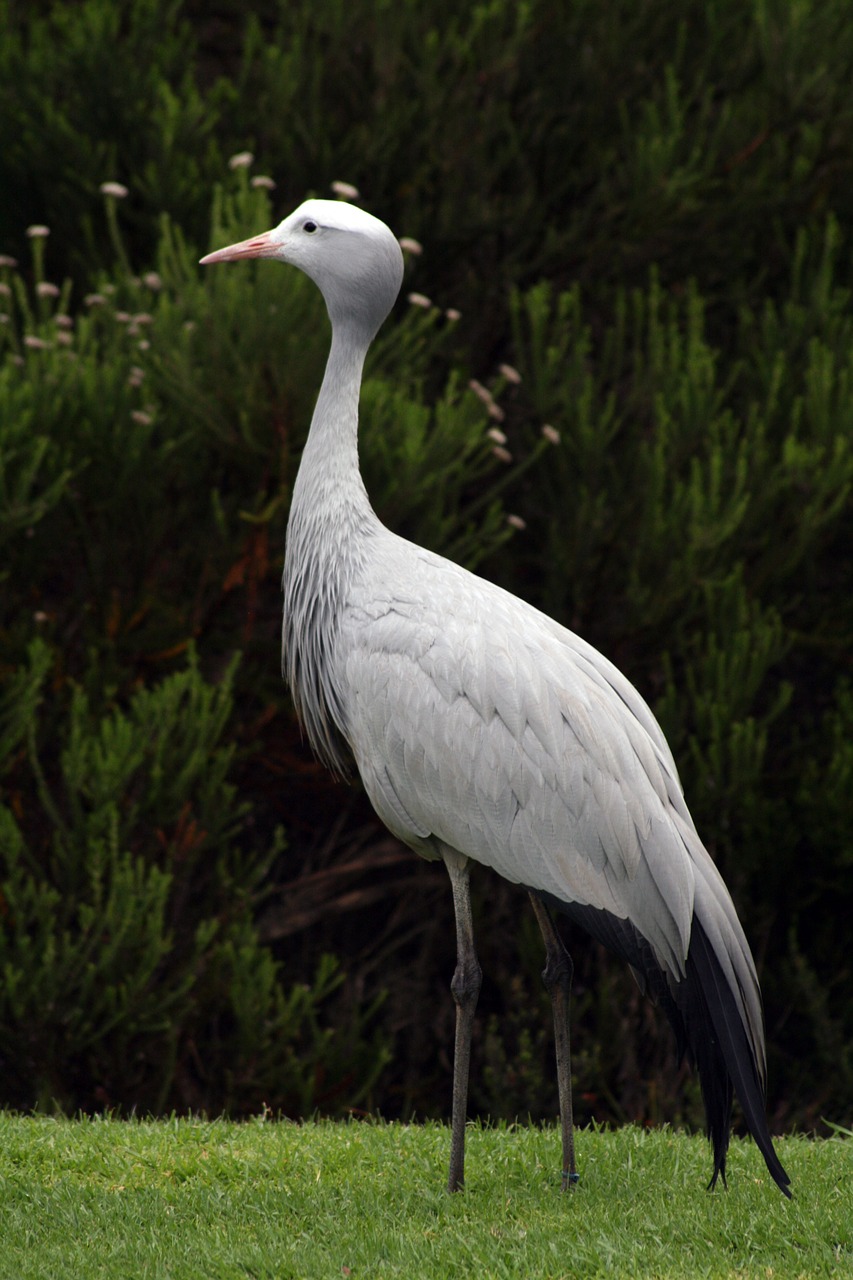
Standing approximately one metre tall, the Blue Crane has pale blue-grey plumage, a relatively large head, a slender neck and long, dark wing feathers that hang behind the body like a tail. These trailing plumes are not true tail feathers but elongated secondary wing feathers. When the bird flies, its long neck is extended forward and its legs stretch out behind it.
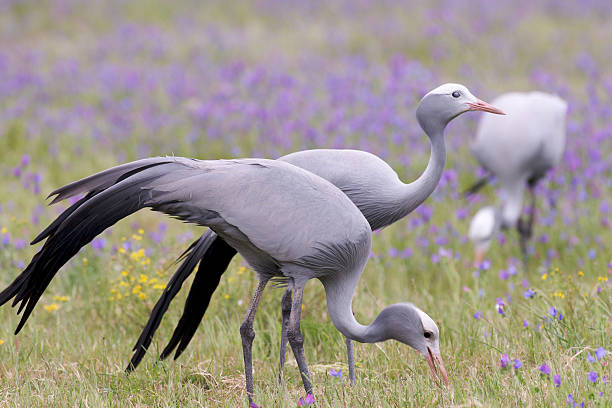
Blue Cranes usually inhabit open grasslands, agricultural land and the dry plains of the Karoo. The Western Cape’s Overberg region supports an especially important population. Although the species originally depended mainly on natural grassland, some Blue Cranes have adapted to feeding and breeding on farmland.
Their diet includes grasses, seeds, roots, bulbs and agricultural grain. They also eat insects, worms, frogs, small reptiles and other small animals. Blue Cranes spend much of the day walking across open ground while searching for food.
Pairs form strong, long-term bonds and perform elaborate courtship displays involving bowing, jumping, running and tossing pieces of vegetation into the air. Breeding generally takes place during the South African summer. The nest is normally a simple scrape on the ground, where the female usually lays two eggs. Both parents help incubate the eggs and protect the chicks.
The Blue Crane in Zulu Culture
The Blue Crane is known as indwa or indwe in isiZulu. Its feathers held recognised status within the historical Zulu kingdom and were associated with bravery, military distinction and royal authority.
Blue Crane feathers were not simply ordinary decoration. Historical accounts indicate that they could be presented by the king and worn by selected warriors, military veterans and members of particular regiments. A crane feather could also be connected with the honour of receiving the isicoco, the traditional headring worn by married or formally recognised Zulu men.
King Shaka is famously depicted wearing a single Blue Crane feather, although surviving historical evidence does not conclusively establish every detail of how he personally used the feather. Later Zulu kings, including King Cetshwayo and King Goodwill Zwelithini, were also recorded or photographed wearing a crane feather as part of ceremonial dress.
The word Isitwalandwe refers to someone who carries or wears the plumes of the rare bird. It came to signify exceptional courage and leadership. The term was later adopted for the ANC’s Isitwalandwe/Seaparankwe Award, its highest honour for people who made an exceptional contribution to South Africa’s liberation struggle.
Blue Crane feathers also have particularly strong documented significance in Xhosa culture, where they were traditionally awarded to men recognised for courage. The bird therefore represents bravery across more than one Southern African cultural tradition.
A Vulnerable Species
The Blue Crane is classified as Vulnerable on the IUCN Red List. Its major threats include the loss and alteration of grassland, poisoning, collisions with power lines, entanglement in fences and disturbance around nesting sites. Protecting the Blue Crane preserves both a distinctive South African species and a bird of considerable national and cultural importance.