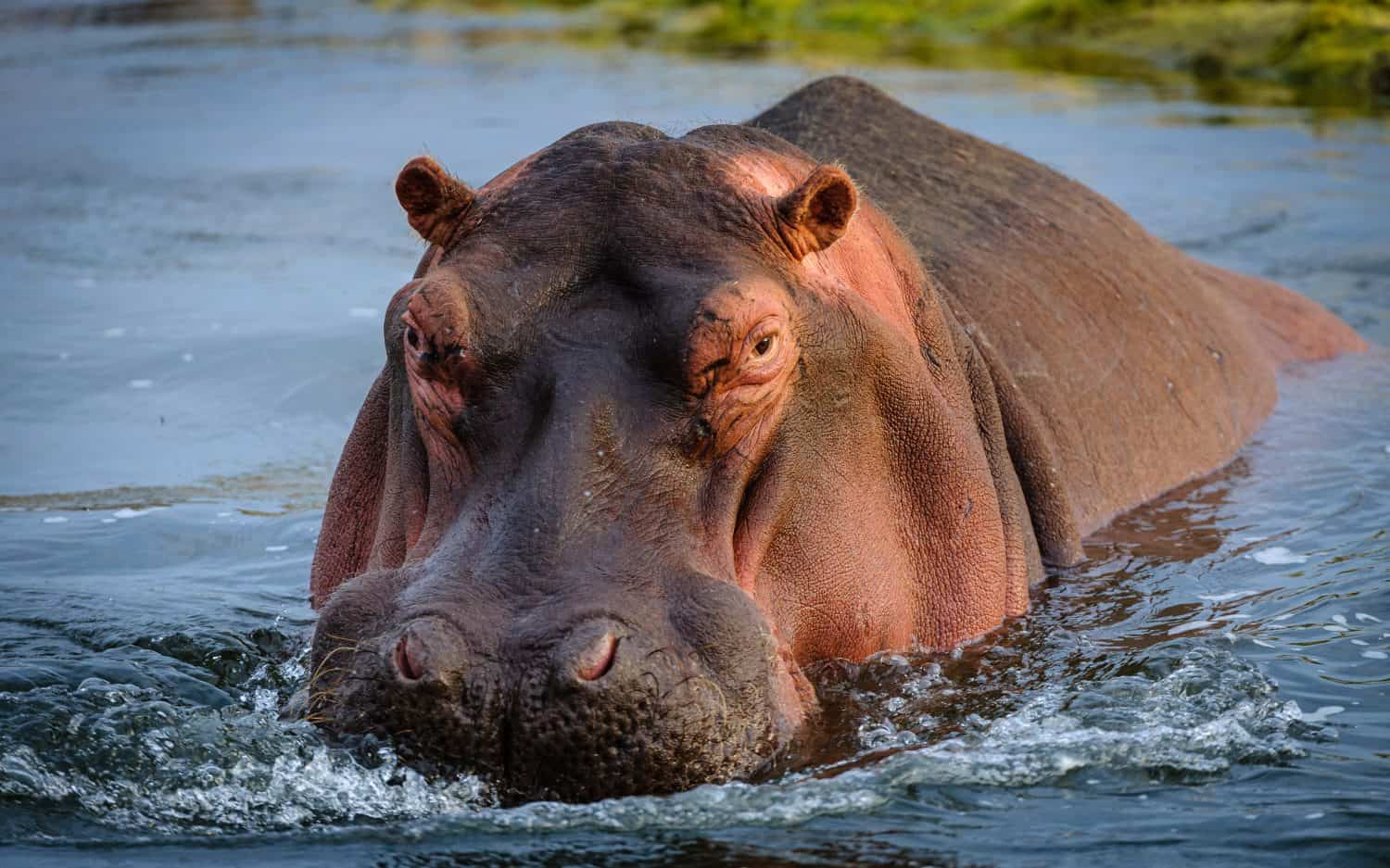
The hippopotamus is one of Africa’s most distinctive mammals. With its enormous body, short legs and broad muzzle, it is closely associated with the continent’s rivers and lakes. Two species survive today: the common hippopotamus and the much smaller pygmy hippopotamus. Common hippos inhabit parts of sub-Saharan Africa, while pygmy hippos occupy forests and swamps in West Africa. Despite their name, which comes from the Greek for “river horse”, hippos are more closely related to whales and dolphins than horses.
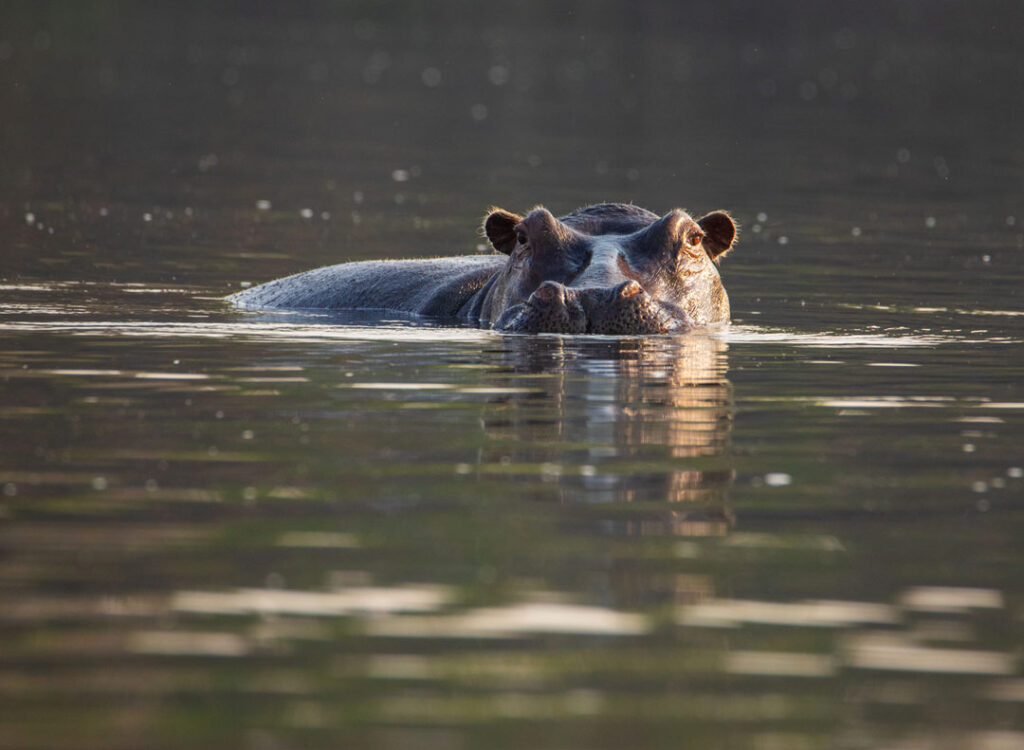
Common hippos typically weigh well over a tonne, with males generally larger than females. Their eyes, ears and nostrils are positioned high on the head, allowing them to see, hear and breathe while most of the body remains underwater. They spend much of the day resting in water or mud, which helps regulate body temperature and prevents their skin from drying out. Their skin produces a reddish secretion with protective properties; this is neither blood nor ordinary sweat.
Although strongly associated with water, common hippos obtain most of their food on land. They usually emerge after sunset and travel along familiar paths to grazing areas. Grass makes up most of their diet, gathered with muscular lips and ground by teeth towards the back of the mouth. Their prominent front teeth serve mainly as weapons rather than feeding tools. Occasional scavenging on animal carcasses has also been recorded, so their feeding behaviour is more varied than a strictly vegetarian description suggests.
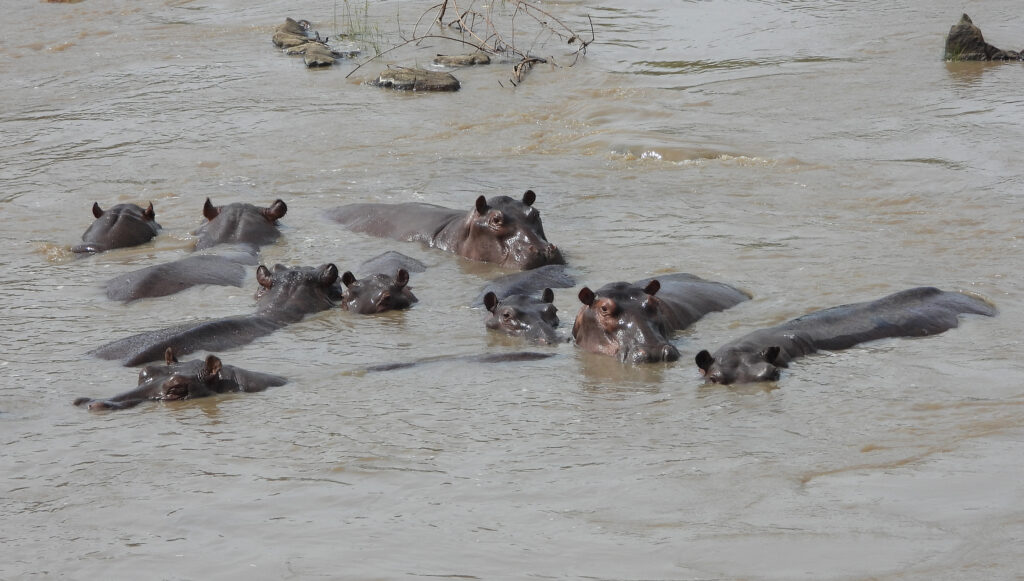
Hippos often gather in groups while resting in water. These gatherings include females, young animals and males, although their social organisation is more complex than a single permanent family herd. Dominant males defend aquatic territories linked to mating opportunities. Other males may be tolerated when they behave submissively. Hippos communicate through grunts, bellows and other vocalisations. During dry periods, shrinking pools can force greater numbers together, increasing competition and aggression among animals already sharing limited space.
Females usually give birth to a single calf after a pregnancy lasting approximately eight months. Birth commonly occurs in shallow water, and calves can suckle both underwater and on land. Young hippos remain closely associated with their mothers, which may respond aggressively to perceived threats. Adults are formidable animals: their weight, powerful jaws and large canine teeth can cause severe injuries. Documented attacks on humans have resulted in crushing wounds, open fractures and deaths.
Hippos are frequently described as Africa’s deadliest animal, but that claim is misleading. Mosquitoes transmit diseases responsible for far more human deaths. The widely repeated estimate of 500 people killed annually by hippos is also uncertain, because comprehensive records are lacking. Their capacity to kill is established; their precise annual toll is not.
Beyond their imposing appearance, hippos connect terrestrial and aquatic ecosystems. By grazing on land and defecating in water, they transfer nutrients into rivers and lakes. Their movements also create well-used pathways through vegetation. Habitat loss, hunting and conflict with people threaten populations, making the hippopotamus both an influential ecosystem resident and a conservation concern across its African range.