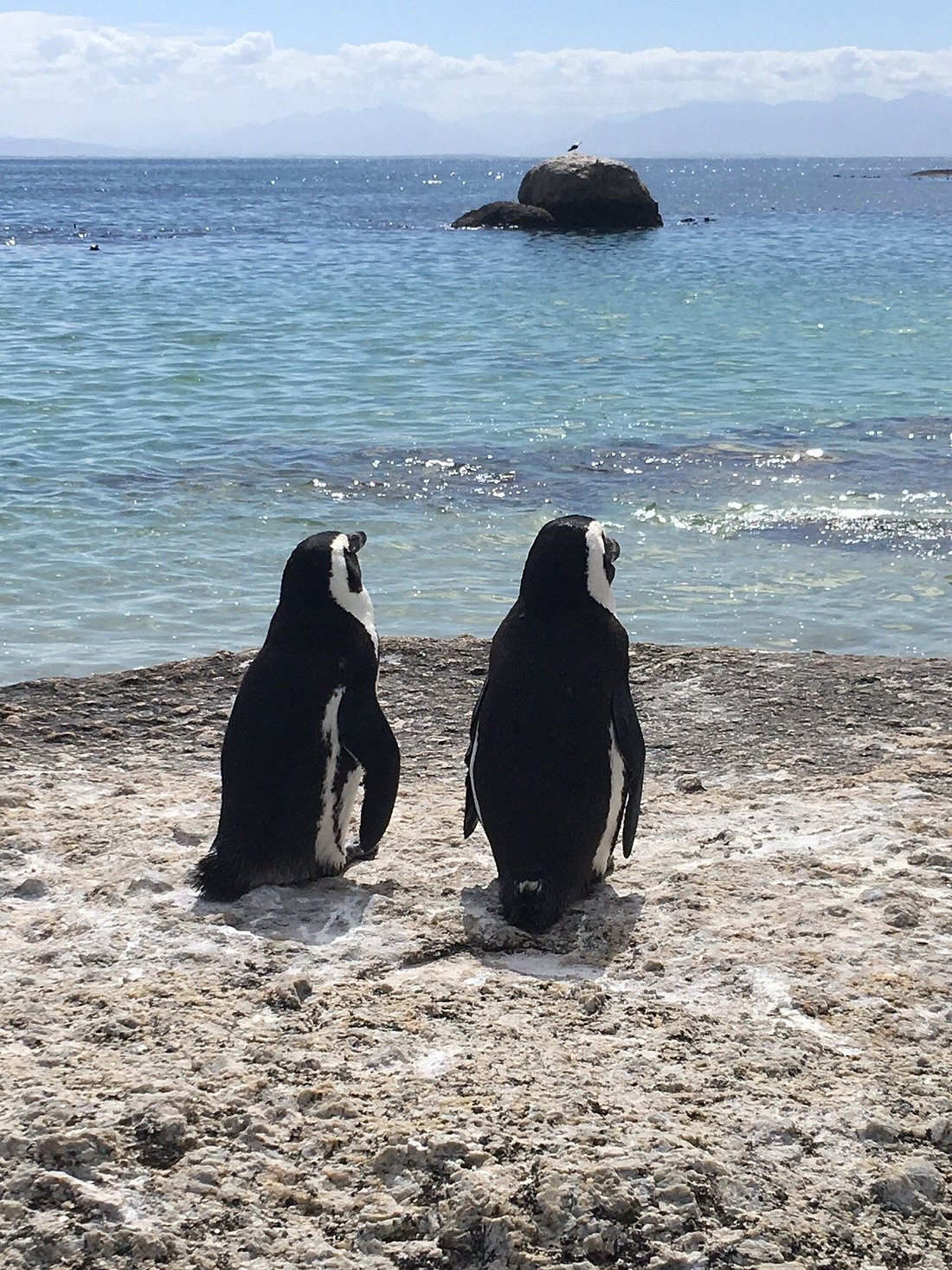
The African penguin (Spheniscus demersus) is a species of penguin native to the coastal waters and islands of southern Africa. It is the only penguin species that breeds on the African continent.
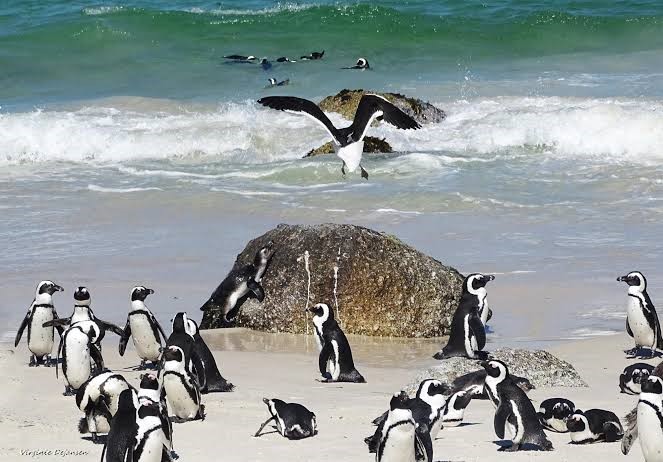
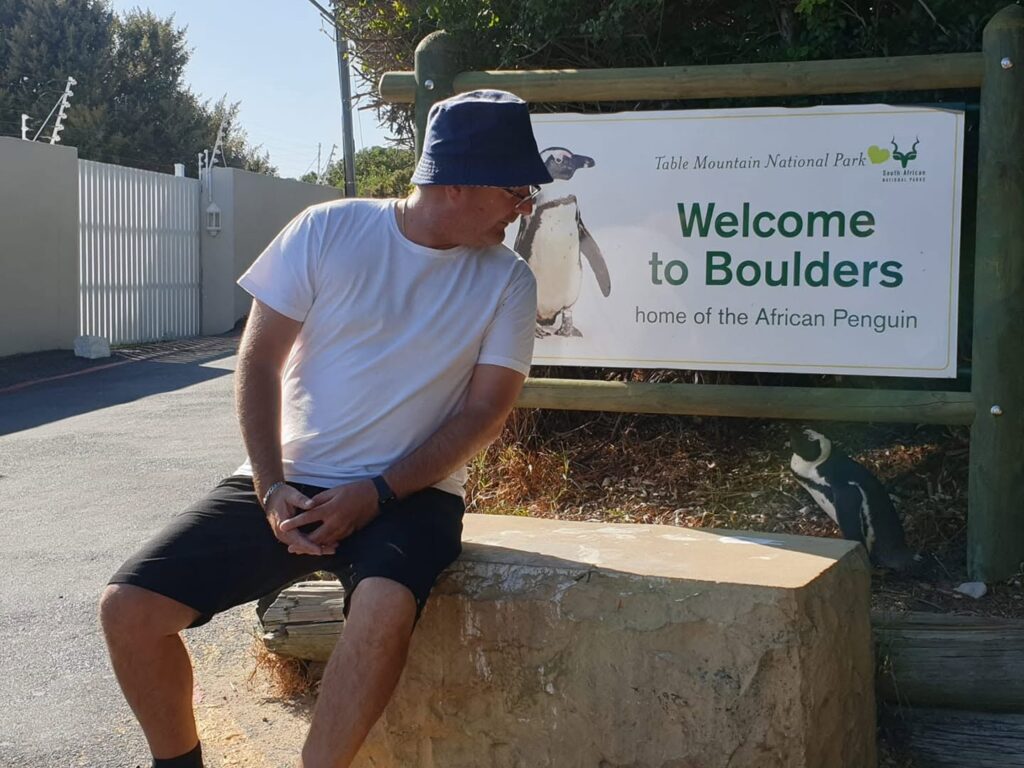
African penguins are found along the coastlines of South Africa and Namibia, with breeding colonies located on offshore islands and at several mainland sites. In the Western Cape, two well-known places where visitors can see African penguins are Boulders Beach near Simon’s Town and Stony Point at Betty’s Bay.
Adult African penguins have distinctive black-and-white plumage. Their backs and flippers are black, while their chests and bellies are white, with a pattern of black spots that is unique to each individual. They also have pink patches of skin above their eyes. These patches help regulate body temperature by allowing heat to escape through the skin.
African penguins are adapted for life in the ocean. Their wings have evolved into strong, flat flippers that allow them to swim efficiently. They feed mainly on small fish and squid, including anchovies and sardines. They can travel considerable distances while searching for food.
The species is sometimes called the jackass penguin because of its distinctive call, which resembles the braying sound of a donkey. African penguins communicate using a range of calls and body movements.
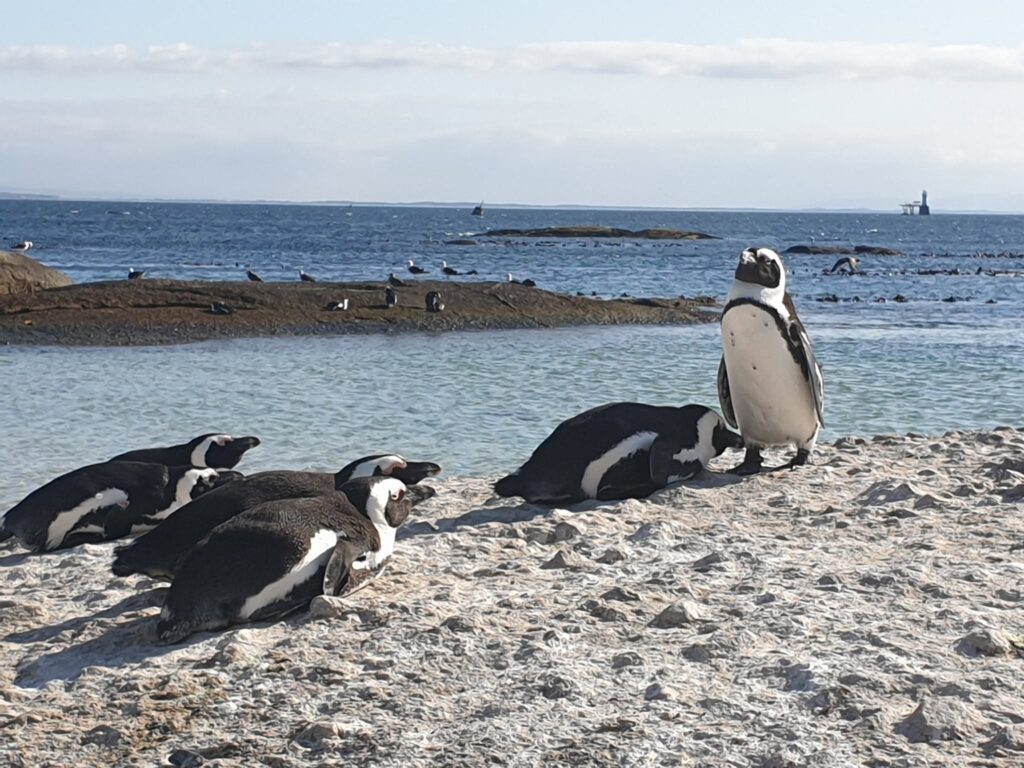
African penguins generally form long-term breeding pairs. They typically lay two eggs, although breeding success can vary depending on food availability and environmental conditions. Both parents participate in incubating the eggs and caring for the chicks. Young penguins eventually develop their adult plumage after going through a moulting process.
Boulders Beach is home to one of the best-known mainland African penguin colonies. The colony is located within Table Mountain National Park near Simon’s Town. Visitors can use designated boardwalks and viewing areas to observe the penguins.
At Betty’s Bay, Stony Point Nature Reserve is another established African penguin breeding colony. The reserve is located on the southern coast of the Western Cape, between Gordon’s Bay and Hermanus. Boardwalks allow visitors to view the colony while keeping a safe distance from the animals.
African penguins are classified as Endangered. Their population has declined significantly over the past several decades. Factors affecting the species include changes in food availability, competition with commercial fishing, pollution, habitat disturbance and environmental changes.
Conservation organisations work to protect African penguins and other seabirds. One organisation involved in this work is SANCCOB (Southern African Foundation for the Conservation of Coastal Birds), which rescues, rehabilitates and releases injured, sick and abandoned seabirds.
If you would like to help support African penguin conservation, you can support SANCCOB directly through its conservation and fundraising programmes.
Support SANCCOB and help African penguins
Both Boulders Beach and Stony Point at Betty’s Bay provide visitors with opportunities to see African penguins while learning about the species and the importance of protecting their coastal habitat.
We visit the Penquins on both our Cape Peninsula and Garden Route Tours and seeing them in the wild is a privilege and a once in a lifetime oppotunity.