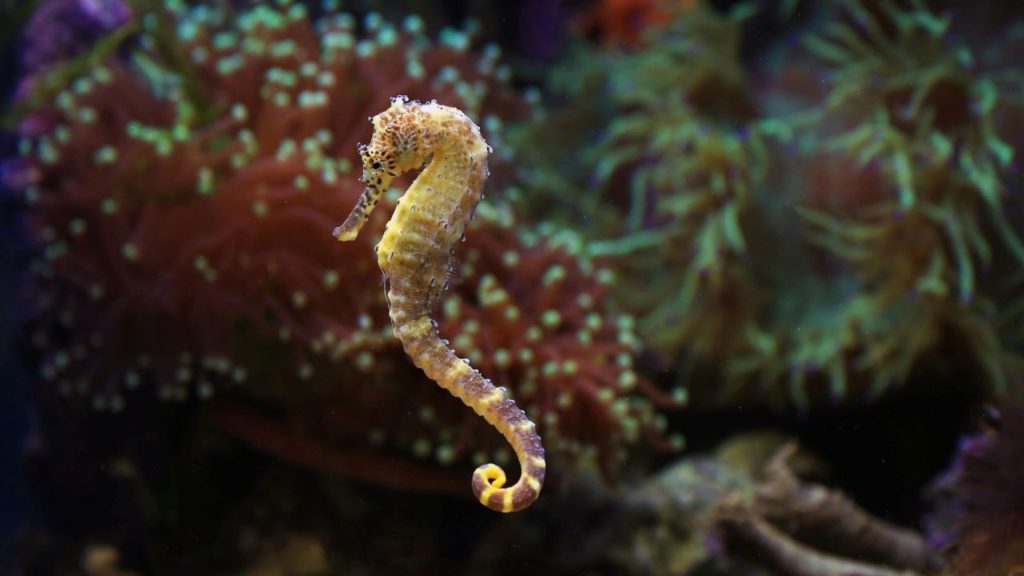
The Knysna seahorse (Hippocampus capensis) is one of the most unusual animals found along South Africa’s coast. It is also one of the few seahorse species that lives in estuaries rather than exclusively in the sea.
The Knysna seahorse is found in the shallow waters of three South African estuaries: the Knysna, Keurbooms and Swartvlei estuaries. It prefers sheltered areas with vegetation, where it can use its prehensile tail to hold onto plants and other structures.
Like other seahorses, the Knysna seahorse has a distinctive upright body, a long snout and a curled tail. It feeds on tiny crustaceans and other small organisms, which it sucks into its mouth through its long snout.
One of the most remarkable features of seahorses is their method of reproduction. The female transfers her eggs to a specialised brood pouch on the male. The male then carries the developing young until they are ready to be released into the water.
The Knysna seahorse is considered particularly vulnerable because it has an extremely limited natural range. Changes to estuarine habitats, pollution and other pressures can affect the species and the delicate ecosystems on which it depends.
Although seeing one in the wild is difficult, the Knysna seahorse is an important reminder of the biodiversity found along the Garden Route. The Knysna Estuary itself is one of the region’s important coastal ecosystems and supports a wide variety of marine and birdlife.
At Convoy Tours, we enjoy showing visitors the natural side of the Garden Route, including the landscapes, wildlife and unique ecosystems that make this part of South Africa so special. The Knysna area is one of the highlights of our private Garden Route tours from Cape Town.
Looking for a Garden Route tour? At Convoy Tours, we’re offering a FREE full-day Cape Peninsula Tour with every Garden Route booking for a limited period only. Get in touch with us to find out more.
The Knysna seahorse may be small and elusive, but it is a fascinating example of how much wildlife can be found in the quieter corners of the Garden Route.