The southern right whale is one of the most recognisable whales found along the coast of South Africa. Every year, these large baleen whales migrate north from their feeding grounds in the Southern Ocean to the warmer coastal waters of southern Africa.
Southern right whales can be seen along parts of the South African coastline, but Walker Bay and Hermanus are particularly well known for sightings.
The whales generally arrive from around August, with numbers increasing during the following months. They remain in the region until approximately late November or December before beginning their migration south again. The exact timing can vary from year to year.
The migration is closely connected to reproduction. Southern right whales use the relatively sheltered coastal waters to mate, give birth and nurse their calves. Newborn calves remain close to their mothers while they develop and build up the strength needed for the journey back towards the Southern Ocean.
Southern right whales are large animals. Adults can reach around 15 metres in length, with females generally larger than males. They have broad heads, stocky bodies and no dorsal fin.
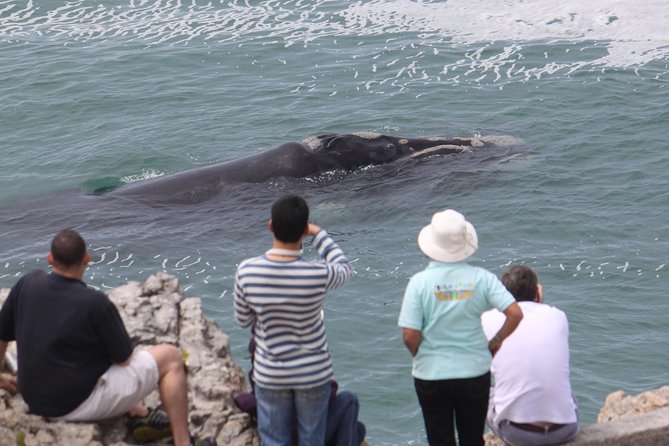
One of their most distinctive features is the presence of callosities on the head. These are areas of thickened skin that appear white or yellowish because of colonies of small crustaceans living on them. The pattern of callosities is different on each whale and can be used to identify individual animals.
Southern right whales are baleen whales rather than toothed whales. Instead of teeth, they have plates of baleen hanging from the upper jaw. Baleen allows them to filter small organisms from the water.
Their diet consists mainly of zooplankton and small crustaceans, including krill and copepods. They feed primarily in the nutrient-rich waters of the Southern Ocean rather than in the coastal breeding areas around South Africa.
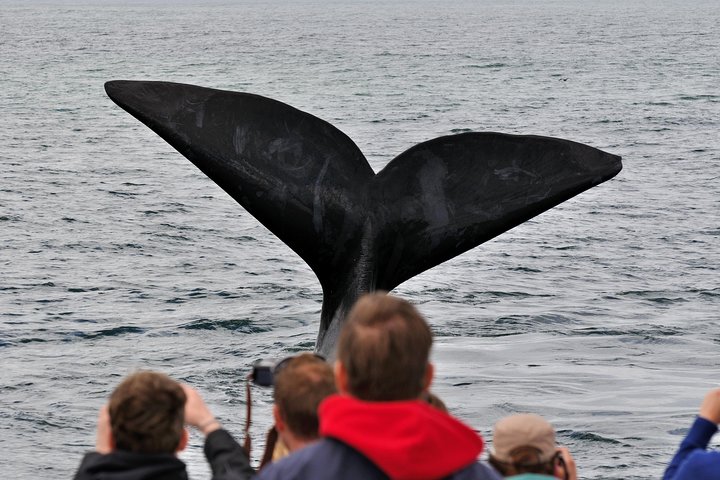
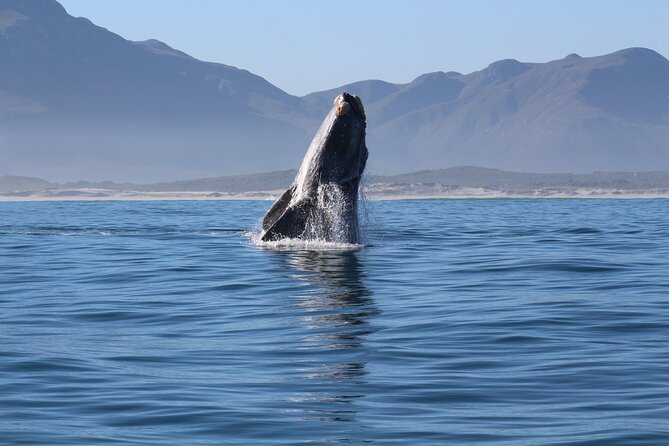
Southern right whales are also known for several behaviours that can be observed from the coast or from boats. They may breach, slap their tails or pectoral fins on the surface, and sometimes approach vessels or remain near the surface for extended periods.
Their scientific name is Eubalaena australis. The species belongs to the family Balaenidae, which also includes the North Atlantic right whale and North Pacific right whale.
The southern right whale was heavily hunted during the commercial whaling era. Its tendency to remain near the coast, slow swimming speed and tendency to float after being killed made it particularly vulnerable. Protection from commercial whaling has allowed populations to recover considerably, although the species continues to face threats from human activity and changes in the marine environment.
Today, southern right whales are an important part of South Africa’s marine wildlife and tourism. Hermanus has become internationally associated with whale watching because of the number of whales that can be seen from the shoreline during the breeding season.
At Convoy Tours, we visit Hermanus throughout the year because of the beauty of the town and its coastline. During whale season, however, the arrival of southern right whales provides an additional reason to visit Walker Bay and experience one of South Africa’s most impressive marine wildlife spectacles.