
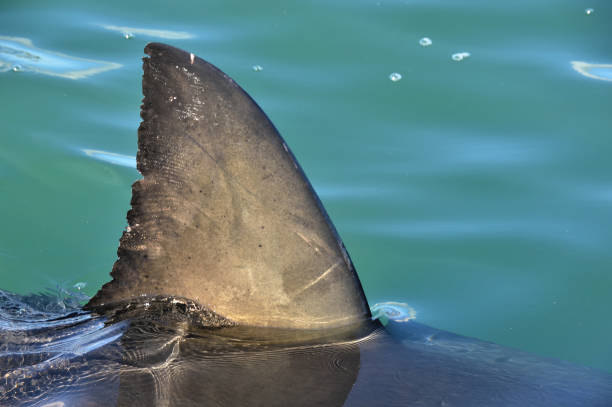
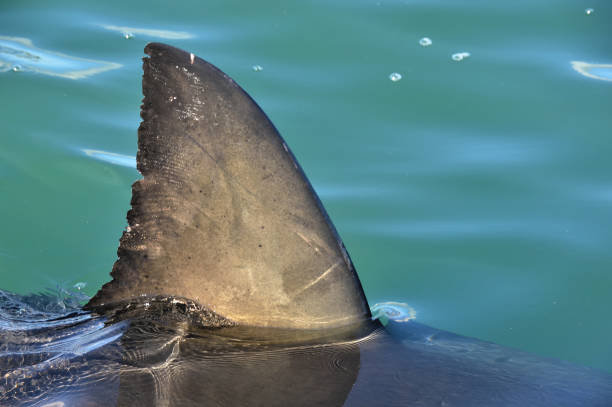
The great white shark has always been my favourite animal. Powerful, mysterious and perfectly adapted to its environment, it is one of the most magnificent creatures with which we share this planet. I have been fascinated by great white sharks for as long as I can remember, and that fascination has only grown stronger over the years.
Even when I watched Jaws as a child, I was on the shark’s side. The shark had done nothing wrong. It was simply living in its own home. If the men trying to hunt and kill it had stayed at home, they would not have had a problem. Of course, Jaws was a fictional story designed to entertain and frighten people, but its influence on the public perception of sharks was enormous. It helped create an image of the great white as a calculating man-eater when the reality is far more complicated.
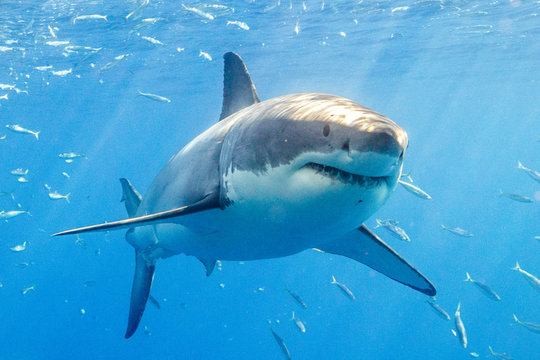
Great white sharks are not monsters. They are wild predators with an essential role in the marine environment. As apex predators, they help maintain balance within ocean ecosystems. By preying on animals such as seals, fish and other marine creatures, they influence the behaviour and distribution of different species. A healthy population of large predators is generally an indication of a functioning marine ecosystem.
Great whites are remarkably well designed for life in the ocean. Their streamlined bodies allow them to move through the water efficiently, while their powerful tails provide sudden bursts of speed. They possess an extraordinary sense of smell and can detect movement and electrical signals produced by other animals. Specialised sensory organs around the snout, known as the ampullae of Lorenzini, help them locate prey, even when visibility is poor.
Their colouring also provides natural camouflage. The darker upper body blends with the ocean when viewed from above, while the white underside is more difficult to see against the brighter surface when viewed from below. This is known as countershading and is found in many marine animals.
Despite decades of research, much about the great white remains unknown. They can travel enormous distances and have been recorded crossing entire oceans. Individual sharks may disappear from a particular coastline and later be detected thousands of kilometres away. Scientists continue to study where they breed, where they give birth and how their movements are influenced by food, water temperature and changing ocean conditions.
That mystery is part of what makes them so fascinating. This is an animal that can grow to several metres in length, travel across oceans and survive in environments that remain largely hidden from us. Yet much of its life still takes place beyond our understanding.
South Africa has long been one of the world’s most important places for great white shark research and observation. False Bay, Gansbaai and other parts of the Western Cape were once famous for regular sightings. False Bay became particularly well known for great whites hunting Cape fur seals around Seal Island. The sharks were sometimes seen launching completely out of the water during an attack—a remarkable display of power and speed known as breaching.
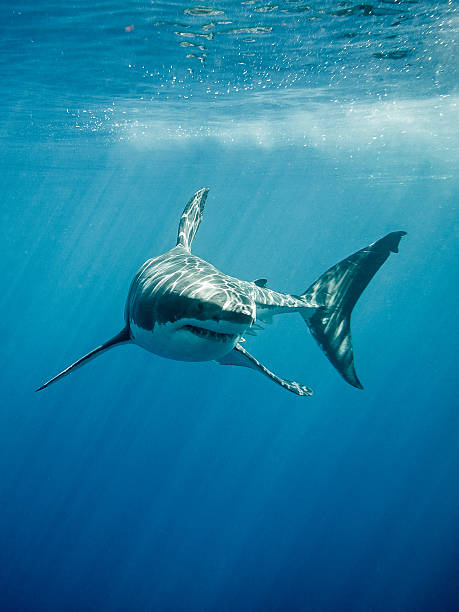
In more recent years, great white sightings around parts of the Western Cape have declined significantly. Scientists have studied several possible reasons, including changes in prey distribution, fishing pressure, environmental changes and the presence of orcas. The complete explanation is still being investigated. Their disappearance from familiar areas reminds us that even the most powerful animals are vulnerable to changes within their environment.
Shark attacks understandably receive enormous attention, particularly when somebody is seriously injured or killed. Every such incident is tragic. However, these events are rare, and they should not be used to present sharks as evil or malicious. A great white does not understand human ideas of right and wrong. It is an animal responding to its environment through instinct, curiosity and the need to survive.
Humans enter the ocean as visitors. It is the shark’s home, not ours. That does not mean the risks should be ignored, but they should be understood in perspective. Respect, research and sensible safety measures are far more valuable than fear and sensationalism.
Sharks have existed for more than 400 million years, meaning they were swimming in the oceans long before the first trees appeared on land. They survived mass extinctions and enormous changes to the planet, yet today many shark species face serious pressure because of human activity. To share this planet with animals possessing such an extraordinary history is our privilege, and protecting them is our responsibility.
At Convoy Tours, we support the conservation of sharks, rays and turtles. These animals all play important roles in healthy marine ecosystems, but they face threats including overfishing, accidental capture, pollution, habitat loss and plastic waste. Protecting the ocean means protecting the animals that depend upon it, including those that are often misunderstood or overlooked.
For me, the great white shark represents everything that makes the natural world extraordinary. It is beautiful, powerful, ancient and still surrounded by mystery. It deserves our respect and protection, not hatred based on films or frightening headlines.
What a privilege it is to live on the same planet as such a magnificent animal. Great white sharks were here long before us, and I hope they continue to patrol our oceans for generations to come. The world would be a far poorer and less interesting place without them.








2 thoughts on “Great White Shark”
Pingback: How Much Should You Tip a Tour Guide in South Africa? - Convoy Tours
Pingback: Leopard - Convoy Tours